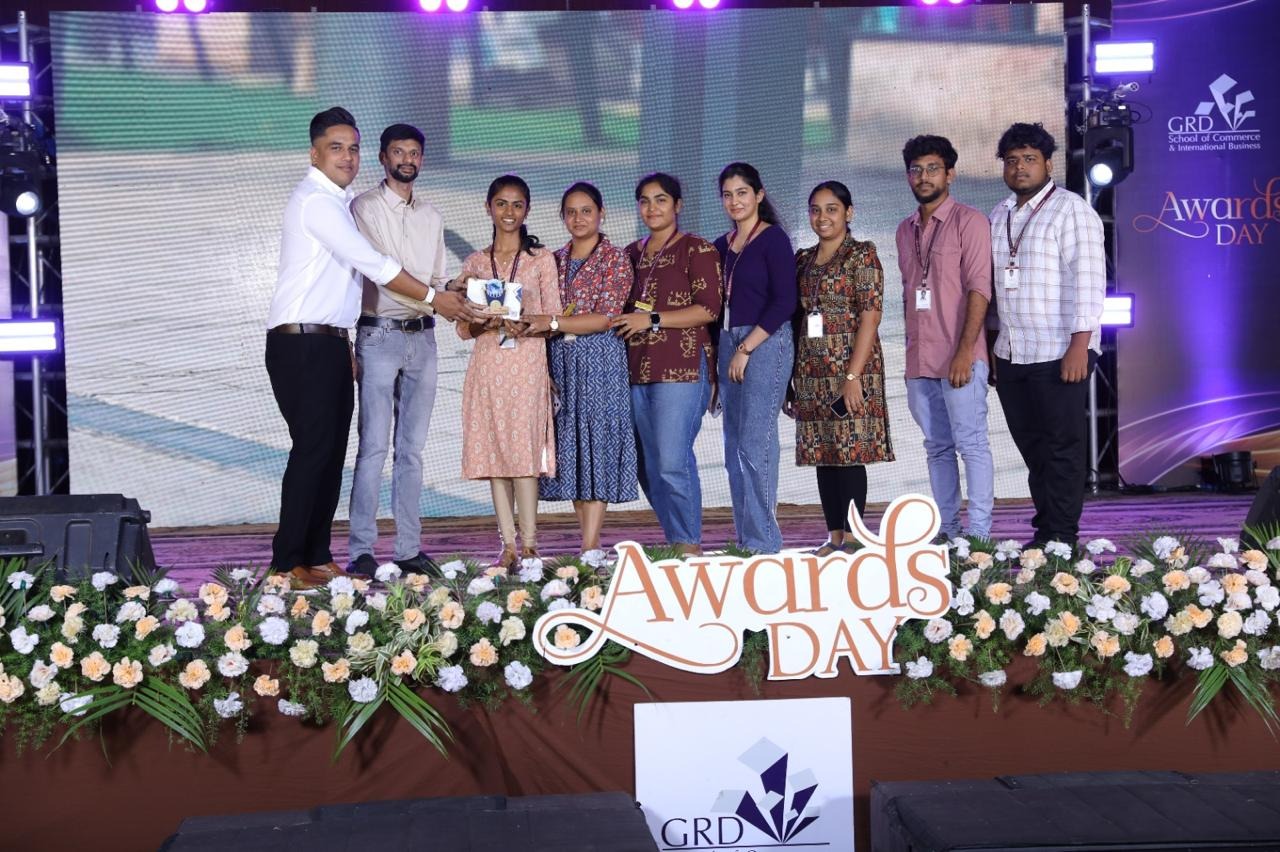
Across the country, universities and colleges have been increasingly talking about innovation, entrepreneurship, and industry preparation. However, in a place called Tomorrow Transformation - A Social Lab at Dr G. R. Damodaran College of Science, students are taking things a step further by addressing societal issues during their academic experience.
From an experiment that has now turned into an educational movement, students have continuously developed initiatives that target issues in health, accessibility, sustainability, education, and community well-being for four consecutive years. Just in the current year, many lives have been positively affected due to the student-initiated action.
Through the guidance of a dedicated educator, researcher, Fulbright scholar, and a strong supporter of experiential education, Dr. K. K. Ramachandran, students get a chance to challenge themselves academically. Unlike learning through lectures and exams, the Social Lab takes this question one step further - can students create a positive impact as they learn?
The answer had always been evident in communities spread all over Coimbatore and further beyond.
The most recent version of the Social Lab saw the participation of 14 groups of students in 28 projects. All of those projects were built around solving actual problems based on research and on-ground fieldwork, followed by documentation and tangible results.
Instead of viewing social work as only an exercise in symbolism, students opted to make an impact in a scalable and sustainable manner.
One of the best case studies came from the realm of emergency management. Students organized CPR, first aid, and emergency response workshops, which managed to train 1346 participants. The project showed not only the power of peer-based learning but also helped youth take a position of active participants in emergency situations.
Another important pillar was related to healthcare initiatives. The students carried out health insurance campaigns for the campus housekeepers, organized eye camps that benefited 200+ people, and spearheaded women’s well-being projects that have benefited more than 350 beneficiaries. There were several important aspects that had been overlooked in normal institutional processes.
Dignity, inclusivity, and accessibility were among the key focal areas in the Social Lab this year.
The most important innovation of the year, called “Voice is Vision,” was dedicated to enhancing mobility of visually impaired people. It consisted of designing six audio beacons as well as developing Samhita Locator Buzzer that aimed to help visually impaired people navigate through public places with ease.
The special importance of the project can be attributed to the combination of empathy, research, and action. Rather than merely organizing awareness drives, students created working models for the solution which were scalable and could possibly benefit future public infrastructure systems.
In addition to making accessibility devices, many groups chose to work on ecosystems for the communities. Campaigns on awareness regarding autism, sustainability, and organ donation helped to create high levels of public involvement where an awareness drive by the students regarding organ donation had over 400 people participating leading to 30 sign-ups.
In addition to government schools, many initiatives focused on bringing about changes through government schools. Sanitation-based infrastructure and educational activities benefited over 1000 people highlighting the importance of engaging at the ground level for creating social change.
Yet another notable initiative, "Care+", was aimed at promoting menstrual health and hygiene awareness, successfully benefiting over 1500 girls.
What sets Tomorrow Transformation apart from other initiatives that seek to engage students is the academic aspect associated with all activities. In addition to the direct involvement of students in activities, all projects involve in-depth reporting, impact assessment and evaluation, documentation and modeling.
Speaking of this approach, Dr Ramachandran believes it to be an integral part of redefining the role and purpose of education.
"Today’s students do not need to wait until their graduation to make an impact," he explains. "When education teaches students to think and use their knowledge for good deeds, they learn how to contribute to the development of society. This is what Social Lab does: it helps students realize their potential."
While India is still discussing new concepts in higher education, the example of Tomorrow Transformation – A Social Lab shows how impactful student-centered learning can be. Not only does such a model help transform lives on a small scale, but also allows to understand how important it is to implement the idea of education for change.
Importantly, the example provided shows that education becomes truly valuable when it improves lives beyond campus walls.
Tags:
student innovation India, experiential education, inclusive innovation, higher education transformation, social impact programs India